The influencer who only codes in Figma
Open Instagram or TikTok right now and you will see the exact same reel on repeat. A guy with perfect lighting and an energetic voiceover points at a computer screen. "This new AI tool just killed React," he says. "Software engineering is officially dead. I built a fully functional SaaS app in twelve minutes without writing a single line of code."
It is a great hook. It gets hundreds of thousands of views. It is also, if you have ever had to support a real codebase, complete nonsense.
We are entering the golden age of the vibecoder. These are people who can write a prompt, watch a beautiful UI compile itself, and instantly call themselves founders. And look, if you just want to build a quick prototype or see what an idea looks like, vibecoding is a superpower. But there is a massive difference between a project that looks clean on a screen recording and a project that actually survives real users.
The glaze vs the grind
Let's call out the glaze for what it is: marketing. The influencers claiming that coding is dead are selling courses, newsletter subscriptions, or their own AI wrappers. They show you the happy path. They show you the fifteen seconds where the button animates beautifully.
What they do not show you is the absolute chaos under the hood.
An AI code builder can generate a stunning dashboard. It cannot explain to you why your database connection pool is maxing out at noon. It cannot structure your authentication flows to prevent session hijacking. It cannot tell you why your React application is doing three hundred unnecessary re-renders every time a user types a single character.
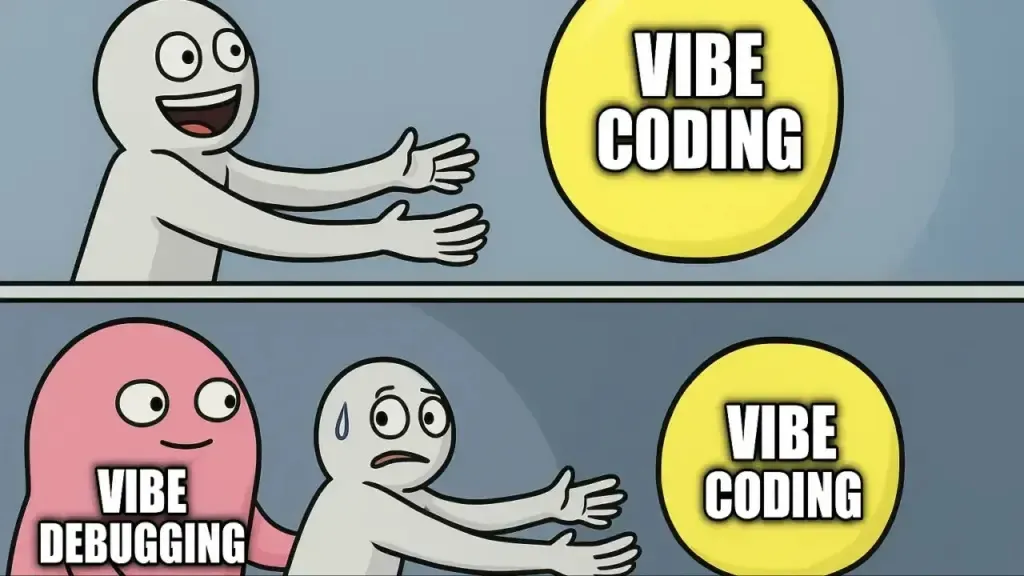
If you do not study the fundamentals, you are not building a business. You are hosting a house of cards on a free tier hosting plan.
You can prompt your way to a demo. You cannot prompt your way to a stable, production-grade system. That requires actual study.
You cannot scale on vibes
Here is the thing about software: the code is only the beginning. The real challenge of engineering starts when real, unpredictable humans start using your product.
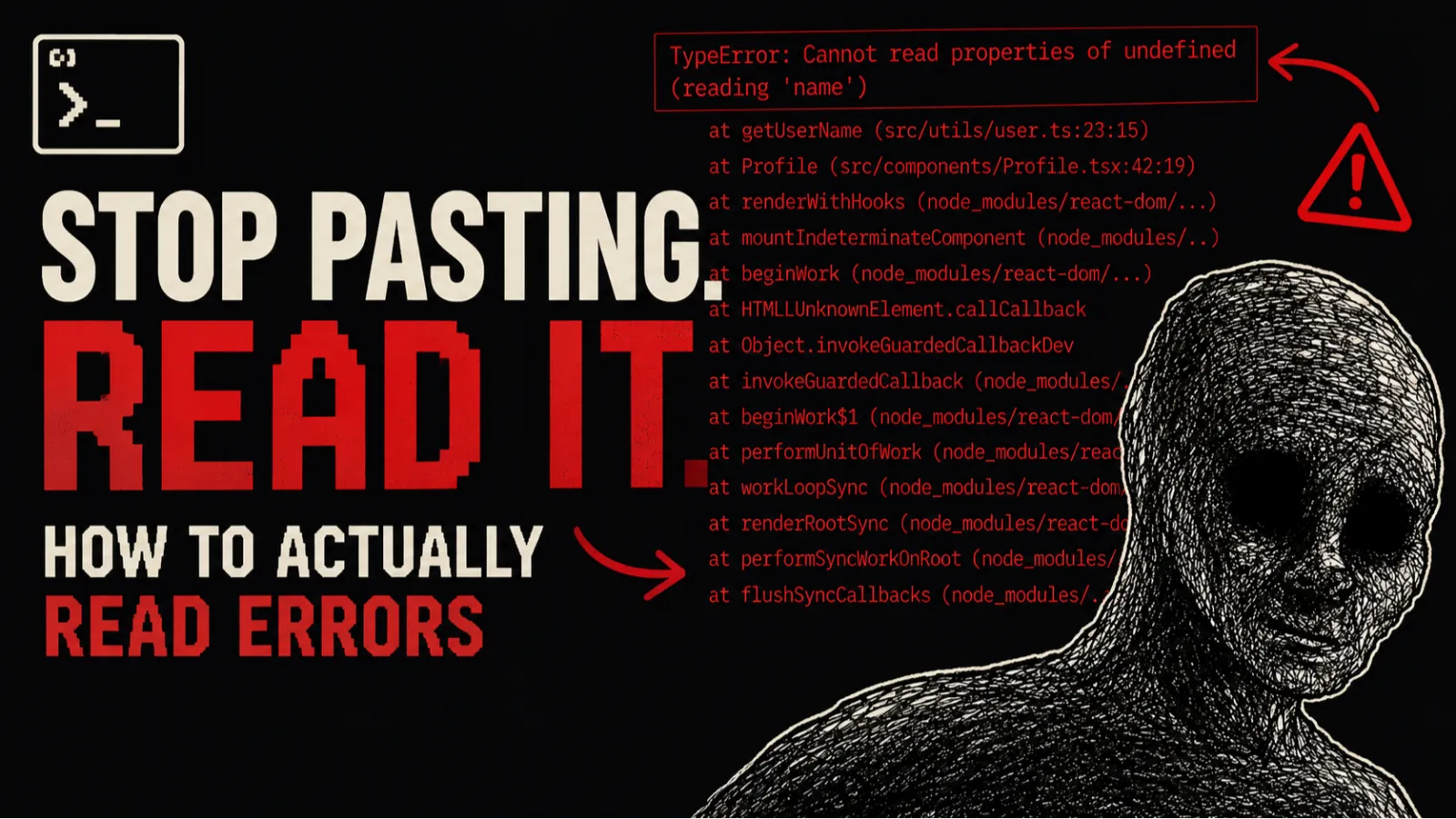
A vibecoder builds an app, posts it, and gets fifty users. Suddenly, two of them click the buy button at the exact same millisecond. Because the generated code did not use database transactions or concurrency controls, both users are charged, but only one gets the seat. The database is now out of sync, the API is throwing 500 errors, and the logs are a wall of red text.
What is the prompt for that? "Fix the bug"?
If you do not understand what a database transaction is, or how database indexes work, or why you need server-side validation, you are completely helpless. You cannot debug what you do not understand.
The trust gap
The real world does not run on screenshots. If you want a company to hire you, or a client to pay you for a feature, they need to know you can handle the unglamorous parts of development. They need to know you can:
Structure a clean relational database schema that enforces data integrity.
Write unit tests that cover edge cases instead of just hoping for the best.
Configure secure CORS policies and manage environment variables safely.
Read server logs and trace a memory leak to its source.
None of these are flashy. None of them make for a viral fifteen-second Instagram reel. But they are the exact skills that separate hobbyists from professionals.
How to use AI without getting lazy
We are not telling you to go back to writing vanilla CSS in a notepad file. Use the models. Use Claude Code, use Copilot, use whatever speeds up your workflow. But stay in the driver's seat:
Understand every line. If you copy and paste a block of code, read it. If there is a function or library you do not recognize, look it up.
Learn the architecture first. Decide how your data flows and how your components communicate before you ask a model to write them.
Focus on the database. Bad UI can be redesigned in a weekend. A corrupted database schema can destroy a company. Learn SQL, constraints, and migrations.
Where Forke fits
This is the entire reason we built Forke. We want to reward developers who actually understand the engineering, not just the prompting.
When you pick up a bounty on Forke, you are claiming a real task in a real repository. You can use whatever tools you want to write the code, but it has to pass a deterministic test suite and be approved by a real reviewer. If your code is a messy pile of copy-pasted prompts that falls over during a edge-case check, it will not get merged, and you will not get paid.
If you are ready to prove you are more than a vibecoder, come claim a task. Let's see what you can actually ship.
Stop glazing the tools. Start studying the craft.